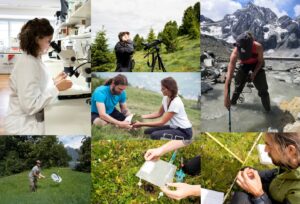
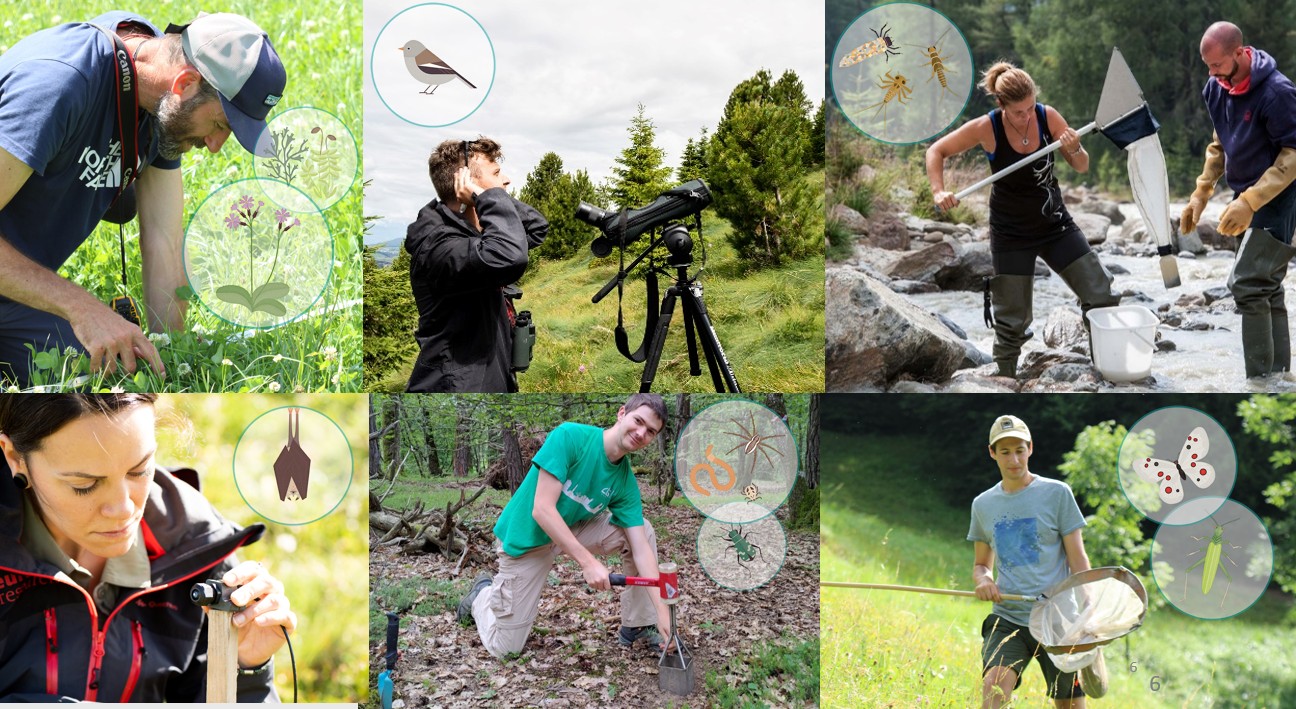
No alpine meadow is too steep for them, no riparian forest too rugged, no mountain pasture too remote, and no apple orchard too monotonous. Since 2019, the team of the South Tyrol Biodiversity Monitoring (BMS) has been active across the entire region, studying a wide range of habitats together with their flora and fauna. Whether ornithologists listening to birdsong before dawn, mammal specialists searching for bats in the middle of the night, botanists and bryophyte experts identifying the most delicate herbs and tiniest mosses, or forest specialists uncovering rare fungi and little-known soil organisms – the discoveries made by the BMS team are diverse and consistently surprising. A long-term study of this kind is unique across the entire Alpine arc. Surveys are repeated every five years at the same sampling sites, allowing for long-term comparisons and documentation of potential changes. A report has now been produced for the first research cycle covering the period 2019–2024. During the Colloquium, results leading to new insights and first records of species will be presented, and possible measures for biodiversity conservation will be discussed. One thing is certain: South Tyrol is one of Central Europe’s biodiversity hotspots, yet this richness is under increasing pressure. The event will be held alternately in German and Italian.
Andreas Hilpold is a botanist at Eurac Research’s Institute for Alpine Environment. As coordinator of the long-term monitoring project, he is well acquainted with both the rewards and the challenges of field research, and he is particularly committed to building bridges between science, decision-makers and the public. Chiara Paniccia is a zoologist and mammal specialist at the Institute for Alpine Environment. She is not only highly active in field research within the BMS, but also involved in targeted projects focusing on the conservation of specific animal species or habitats.
The event can also be followed online on the Museum’s YouTube channel.