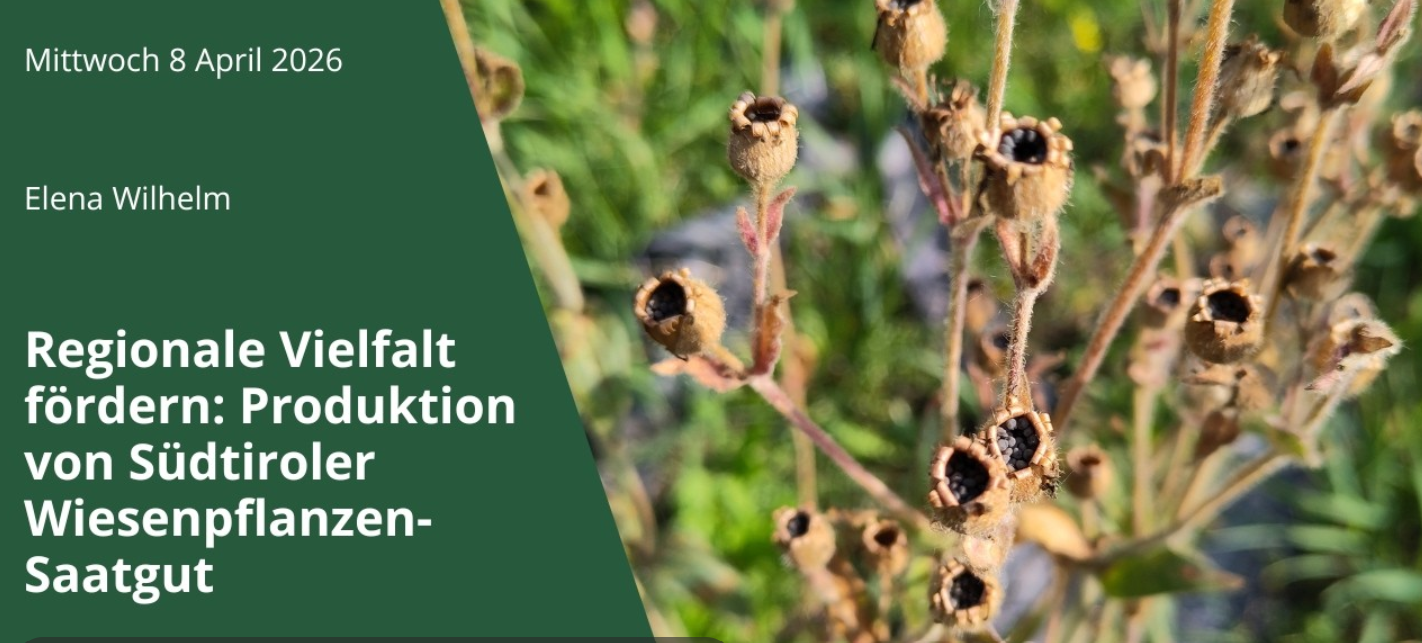
Extensively managed meadows, characterised by low fertiliser input and infrequent mowing, are among the most species-rich habitats in South Tyrol. These environments host dozens of vascular plant species, which provide food and habitat for insects and other organisms. As part of the “Regional Seeds” project at the Laimburg Research Centre, seeds and fruits of perennial plant species are collected from these biodiversity-rich meadows, then dried, cleaned and stored under controlled conditions. The cleaning process is particularly challenging, as the seeds and fruits are often only a few millimetres in size. To address this, various machines are used to separate the diaspores from the remaining plant material. Since each species has diaspores with distinct shapes and sizes, sieve sizes and air pressure must be carefully adjusted for each species. In the laboratory, the seed material is tested for germination capacity in a germination chamber under standardised light, temperature and humidity conditions. For 24 species, multiple trials have already been carried out over several growing seasons to determine how best to cultivate and propagate them. Looking ahead, the aim is to develop a seed mixture from the collected material for revegetating the spaces between rows in orchards and vineyards. The use of regional seeds is expected to enhance biodiversity in agricultural landscapes and support the establishment of beneficial organisms, such as hoverflies.
Elena Wilhelm works at the Laimburg Research Centre and has been focusing for over three years on the challenges of producing seeds from native plant species in South Tyrol.
The event can also be followed online on the Museum’s YouTube channel.