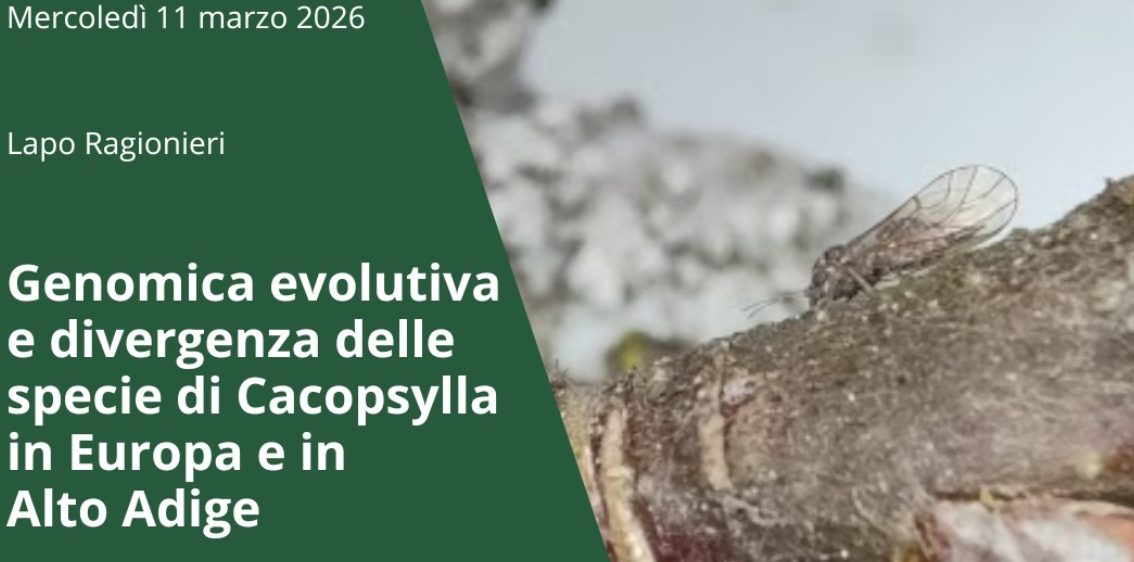
The biodiversity of phytophagous insects is often closely linked to the host plants with which they interact. In some species, different populations specialize on different host plants and, although they share the same environment, mate primarily on their preferred host plant, thereby reducing interbreeding between groups with distinct preferences. Over time, this process can promote the evolution of new, reproductively isolated species that display limited morphological diversity. In South Tyrol, significant examples can be found among psyllids (Hemiptera: Psyllidae), particularly within species of the genus Cacopsylla. Many of these species exhibit specific preferences for different types of plants, and some may also act as vectors of plant-specific phytoplasmas with which they are biologically associated, capable of causing severe damage to crops. This Colloquium will present examples of ecological speciation in species of the genus Cacopsylla and the results of genetic studies conducted on natural populations in South Tyrol and across Europe. Ecological and climatic factors that may influence the acquisition and transmission of phytoplasmas will also be discussed, with particular attention to effects associated with global warming, in order to improve risk assessment and develop more effective control strategies.
Lapo Ragionieri is a molecular entomologist at the Competence Centre for Plant Health of the Free University of Bozen-Bolzano. His research focuses on the population genetics of various insect species, with particular emphasis on those that act as vectors of phytoplasmas and pose a threat to agricultural crops.
The event can also be followed online on the Museum’s YouTube channel.