Project description and objectives:
The concept of soundscape emerged in the late 1960s and was developed by the Canadian composer and sound researcher Raymond Murray Schafer. It refers to the acoustic environment as perceived by humans, i.e. all sounds, noises, and auditory signals in our surroundings. Over time, the concept has been adopted across various research fields, including ecology, psychology, and engineering. Within the same concept of soundscape, two main approaches are often distinguished: standardized research protocols (ISO 12913-1) primarily focus on human perception of the soundscape. Other approaches, however, concentrate on the analysis and description of the soundscape itself (ecoacoustics). The latter includes so-called biophony (sounds produced by living organisms, such as bird song, insect chirping, or animal calls), anthropophony (sounds generated by human activities and technologies), and geophony (natural non-biological sounds such as flowing water or rustling leaves). Within the Biodiversity Monitoring South Tyrol (BMS), targeted recordings of animal sounds (birdsong, bat calls) are also carried out for species identification. The two approaches described above—ecoacustics on the one hand and the study of human perception on the other—often run in parallel. However, integrating them would provide a more comprehensive understanding of ecosystems. The project aims to bridge this gap by developing an integrated approach that combines human-centered methods with bio- and ecoacoustic techniques. Focusing on the Alpine region in South Tyrol, the project investigates how sound can simultaneously contribute to human well-being and biodiversity monitoring.
Main objectives:
• To examine to what extent measures of sound perception (psychoacoustic indices) can provide insights into biodiversity.
• To analyze how bioacoustic data can complement studies on human sound perception.
• To develop guidelines for soundscape management in protected areas, with the aim of reducing anthropogenic noise pollution.
Methods:
The project runs for 36 months and follows an innovative multi-method approach:
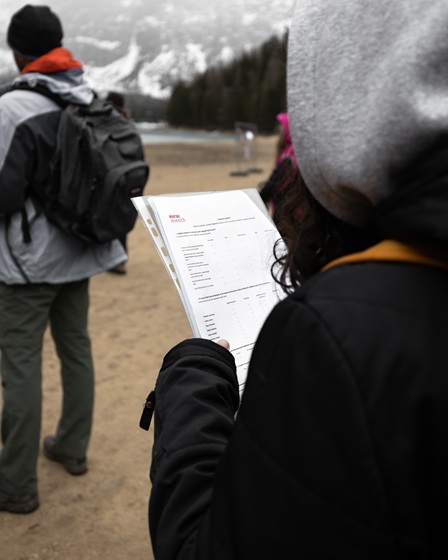
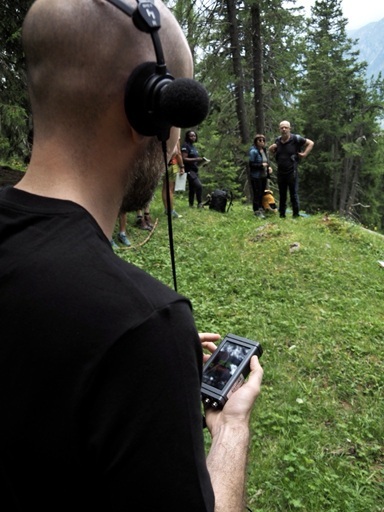
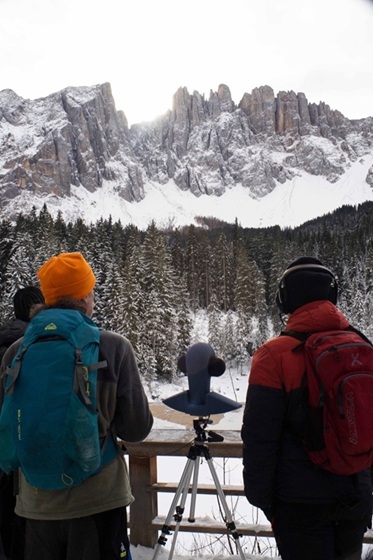
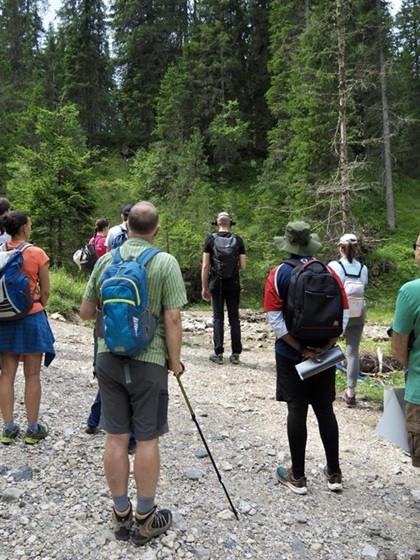
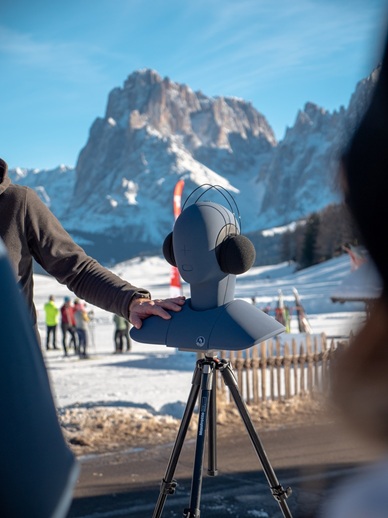
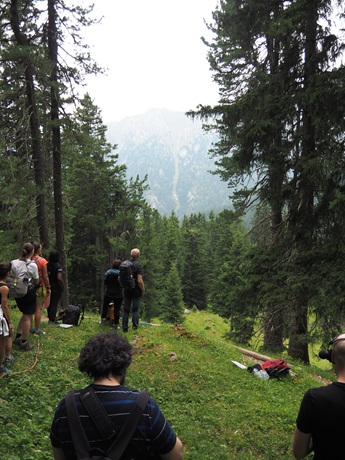
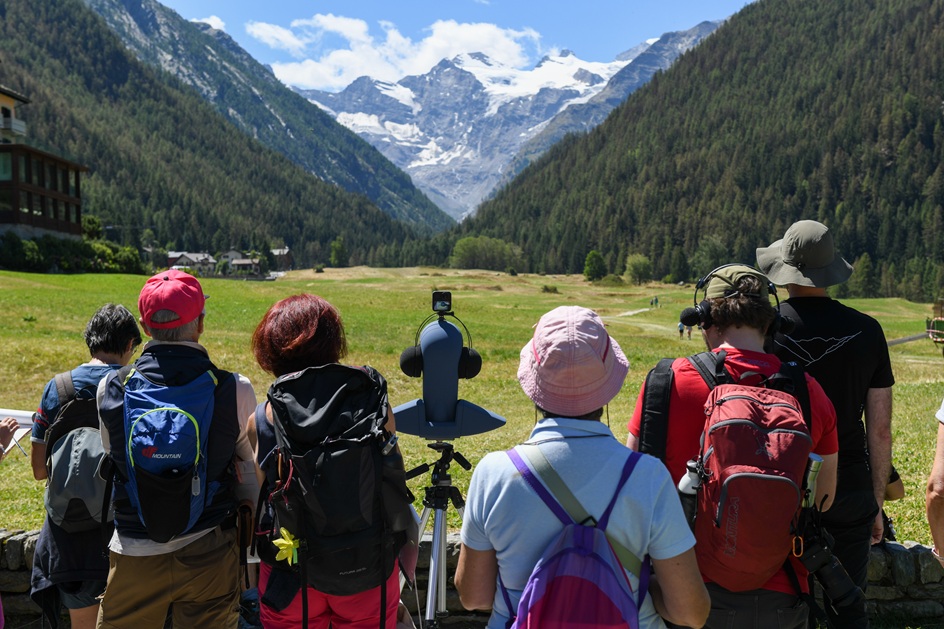
• Field monitoring and soundwalks: Around 15 so-called soundwalks will be conducted in long-term study areas in the Alps, including locations near several BMS sites. Volunteers will participate, and their perception of the soundscape will be collected through questionnaires. These data will be combined with binaural audio recordings that simulate human hearing.
• Psycho-ecological acoustic analysis: Audio signals are analyzed using specialized software (e.g. Artemis by HEAD Acoustics) to extract acoustic data and perceptual metrics. These data are then linked with biodiversity data (identification of present bird species) as well as ecoacoustic data on natural sounds (e.g. using RStudio).
Partner:
Eurac Research (Institute for Alpine Environment), University of Trento (Department of Civil, Environmental and Mechanical Engineering), University College London (UCL) (Institute for Environmental Design and Engineering), Stiftung HEAD-Genuit (funder).
Contact:
Giacomo Gozzi: giacomo.gozzi@eurac.edu
Matteo Anderle: matteo.anderle@eurac.edu