Project description and objectives:
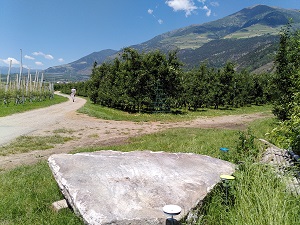
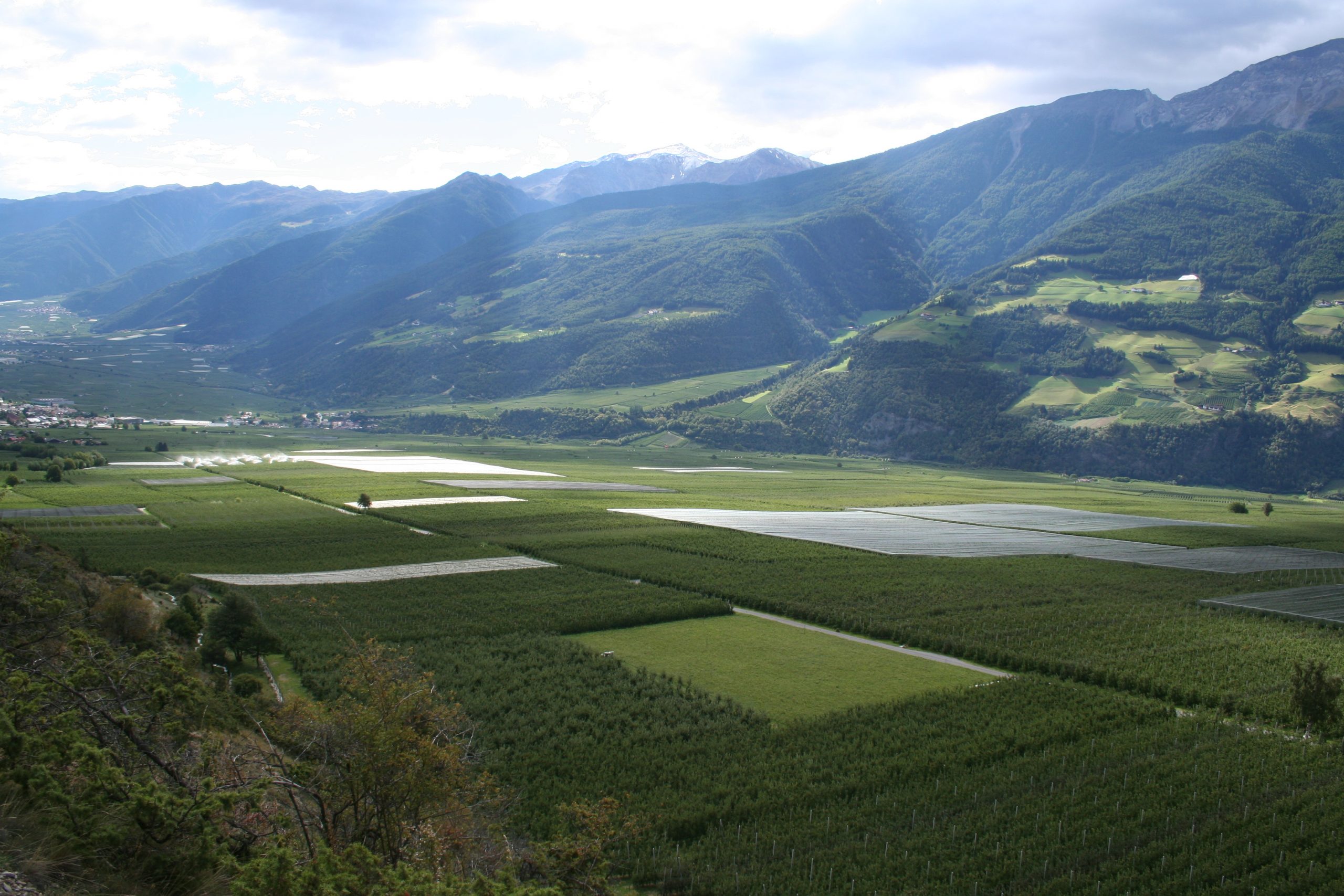
Intensive apple cultivation in many areas of South Tyrol results in relatively species-poor flora and fauna – something that is visible both to the untrained eye and confirmed by scientific literature. The research findings of the Biodiversity Monitoring South Tyrol (BMS) have further substantiated these assumptions with locally collected data. In the meantime, however, there have been increasing efforts within the agricultural sector to counteract this loss of biodiversity. In a model area – the so-called “Schneewinkel”, an apple-growing area near Schlanders/Silandro in the Vinschgau/Val Venosta valley – suitable biodiversity-enhancing measures are being tested. The BMS team works closely together with the Association of Vinschgau Fruit and Vegetable Producers (VI.P) and with the South Tyrolean Advisory Service for Fruit and Wine Growing.
The central phase of the “Schneewinkel” project focuses on implementing biodiversity-promoting measures together with landowners that have already proven successful elsewhere. These include measures in marginal and boundary areas (e.g. hedges, solitary trees, dry-stone walls) as well as within the orchards themselves (e.g. sowing flowering plants for pollinators). The BMS team accompanies the project scientifically in order to investigate how these interventions affect the area in the long term and what conclusions can be drawn regarding species diversity and composition.
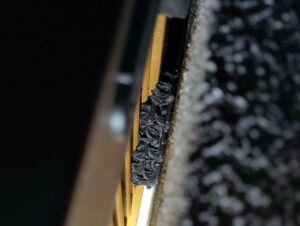
During a pilot phase of the project, surveys on various groups of organisms were already carried out in 2020 at a total of eight sites (four within the core Schneewinkel area and four outside the area) as part of the BMS. Surveys focused on butterflies and other flying and pollinating insects, bats, and birds. In 2025, the surveys from the pilot phase were repeated. This monitoring series at five-year intervals allows us to document the current state of the area (baseline survey), that is, at a point in time before any specific improvement measures had been implemented. This baseline survey should make it possible in the future to demonstrate changes caused by the measures.
In addition to the direct effects on biodiversity, the project also addresses specific agronomic questions (e.g. regarding pest insects and their control through increased biodiversity and natural enemies). Alongside the scientific surveys, exchange with farmers, cooperative members, and political decision-makers plays an essential role. The broader public is also meant to be involved. The aim is to communicate the importance of a richer flora and fauna in fruit-growing areas. Furthermore, the project seeks to illustrate new approaches for increasing biodiversity in intensive agriculture. Finally, the various measures are discussed with all stakeholders involved. In the long term, the practical measures developed in the “Schneewinkel” area should also be applicable in other apple-growing regions.
Partners:
Association of Fruit and Vegetable Producers of the Vinschgau Valley (VI.P), South Tyrolean Advisory Service for Fruit and Wine Growing, Laimburg Research Centre
Contact:
Andreas Hilpold: andreas.hilpold@eurac.edu
Dietmar Battisti: dietmar.battisti@eurac.edu

In the picture: the song thrush.
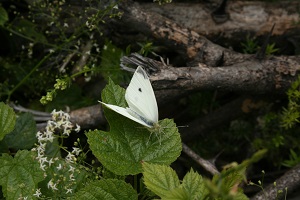
In the picture: Small White, Pieris rapae.