GRACE – Urban roofs as Green Infrastructure for better-connected Alpine Cities
Background
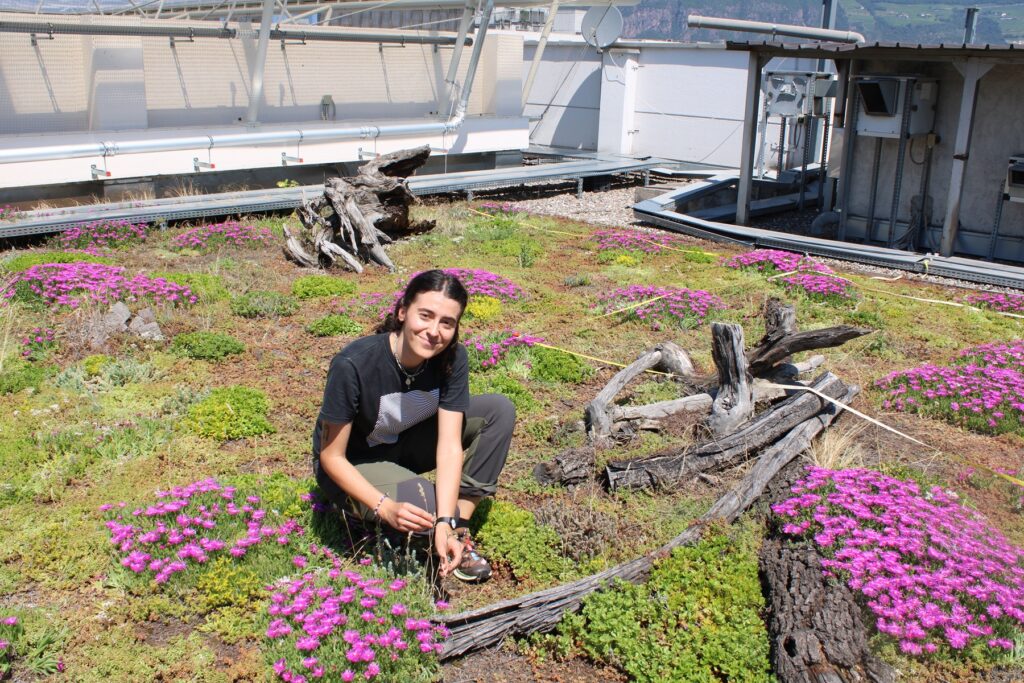
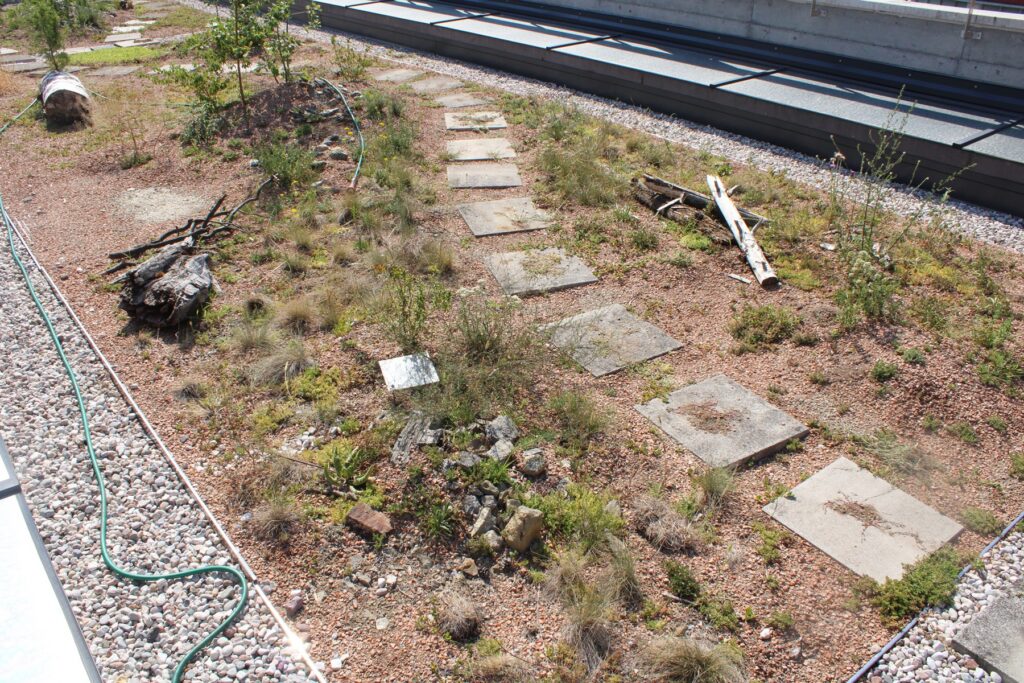
The roofs of urban buildings are often regarded as purely technical elements and assessed exclusively according to architectural criteria—even though they can offer much more. When these roofs are greened, they become a valuable environmental resource: they help mitigate the effects of climate change and are also highly attractive from an aesthetic perspective. In densely populated Alpine cities in particular, they offer several benefits: green roofs promote biodiversity, improve microclimatic conditions, increase the proportion of green infrastructure in urban areas, help reconnect fragmented ecosystems between cities and the surrounding rural areas, and expand habitats for various species.
Project Description, Objectives and Duration
GRACE is a cross-border Interreg Italy–Austria research project coordinated by the Institute for Regional Development and supported by other institutes at Eurac Research. Essentially, GRACE aims to investigate the above-mentioned potential of green roofs in greater detail.
The project is scheduled to run for two years (April 2026–March 2028). In addition to scientific surveys at a total of 12 rooftop sites in Bolzano, Innsbruck and Udine, it also includes knowledge-transfer activities for urban-planning professionals, interest groups, citizens and schools.
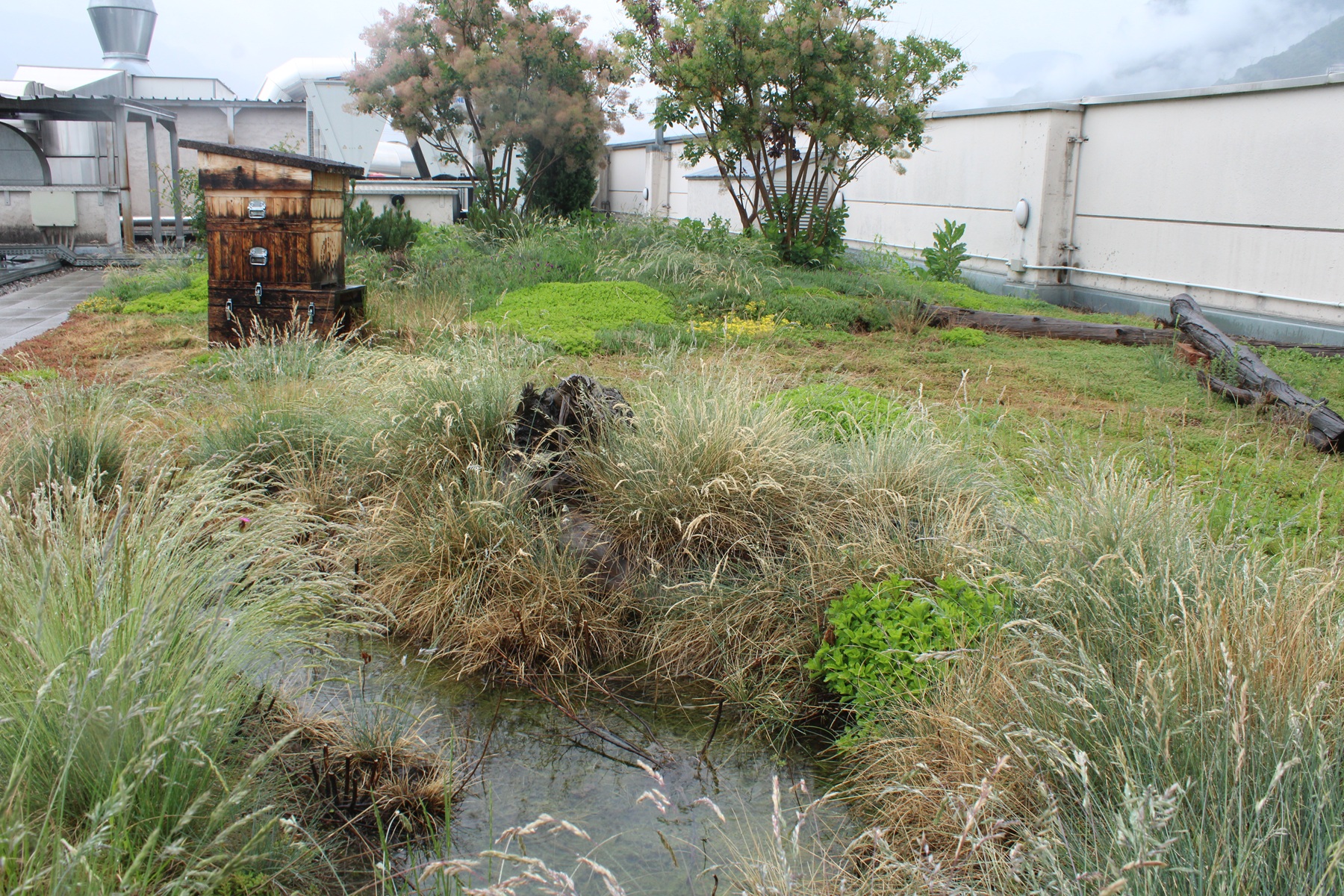
Part of the project is being implemented, so to speak, “right on our doorstep”: in spring 2026, a green roof was installed on the historic red Eurac building on Viale Druso. This rooftop garden recreates, in miniature, various South Tyrolean landscape types together with their characteristic flora. It will serve as a practical example for testing and demonstrating the implementation of green roofs as nature-based solutions to climate change.
Methods
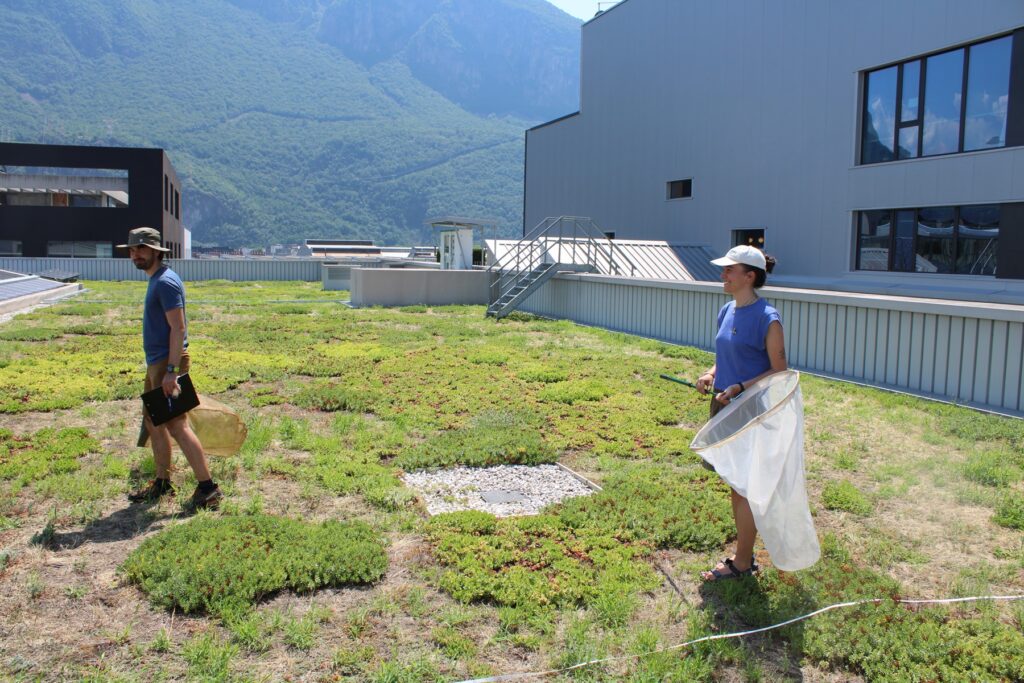
GRACE analyses the strategically important role of green roofs in highly built-up urban areas (e.g. residential areas, industrial zones and commercial areas). Methods developed as part of the Biodiversity Monitoring South Tyrol are used to investigate the effects of green-roof infrastructure. These include botanical surveys and surveys of butterflies, grasshoppers and wild bees. Bats and birds are recorded using acoustic recording devices and identified at a later stage. In addition to these tried-and-tested methods already used in the BMS-programme, innovative approaches are also being applied: a Malaise trap is installed on the roofs, and a light trap is used. While the Malaise trap collects numerous groups of insects over an extended period, the light trap is ideal for recording nocturnal moth species. The insects collected in this way are not identified morphologically; instead, their DNA is sequenced. Metabarcoding makes it possible to record a large number of animal species in a relatively short time.
The monitoring is combined with microclimatic analyses and spatial modelling. The practical experiments and horticultural observations conducted on Eurac’s newly installed green roof also provide valuable insights.
Taken together, the findings are intended to support the development of practical tools for more sustainable urban planning. The aim is to identify targeted nature-based solutions that make cities more resilient and liveable while further improving connections within urban green infrastructure.
Partners involved in the biodiversity surveys:
- Tiroler Landesmuseen, Innsbruck (Austria)
- University of Udine
- Institute for Regional Development – Eurac Reserach
Further information about the project as a whole and the other partners is available on the project’s official website.
Contacts:
Andreas Hilpold: andreas.hilpold@eurac.edu
Kinga Kovács: kinga.kovacs@eurac.edu