Background and project description:
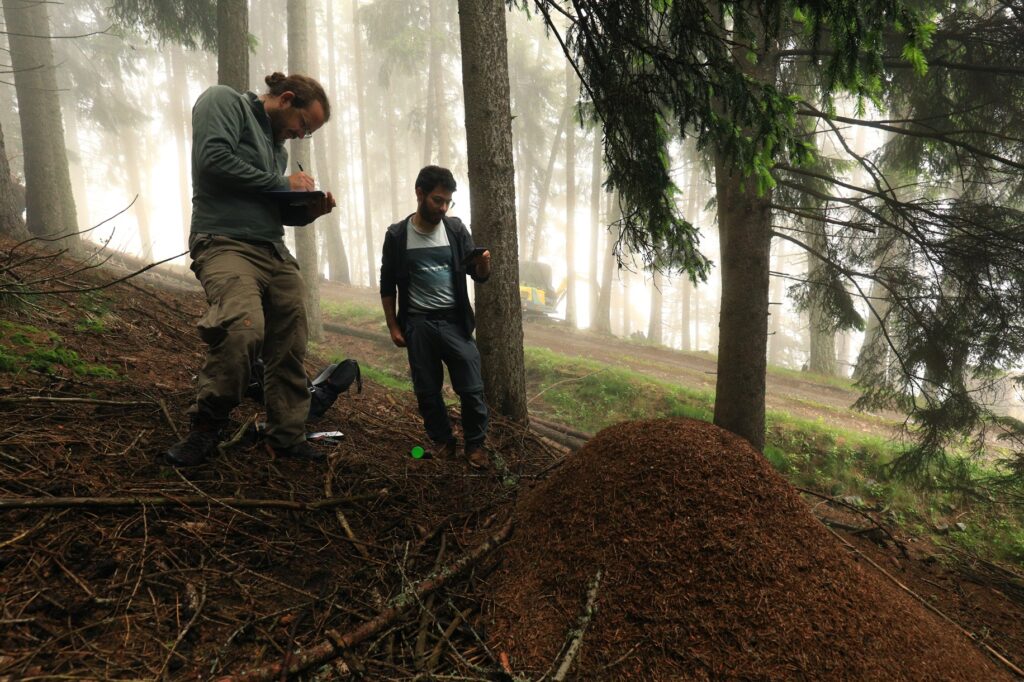
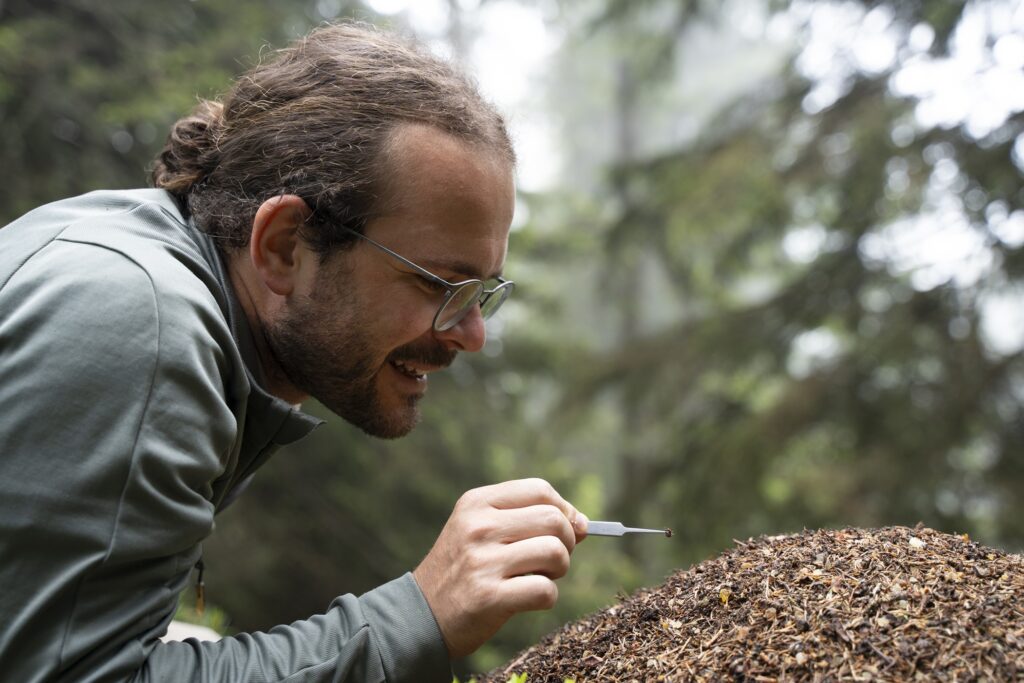
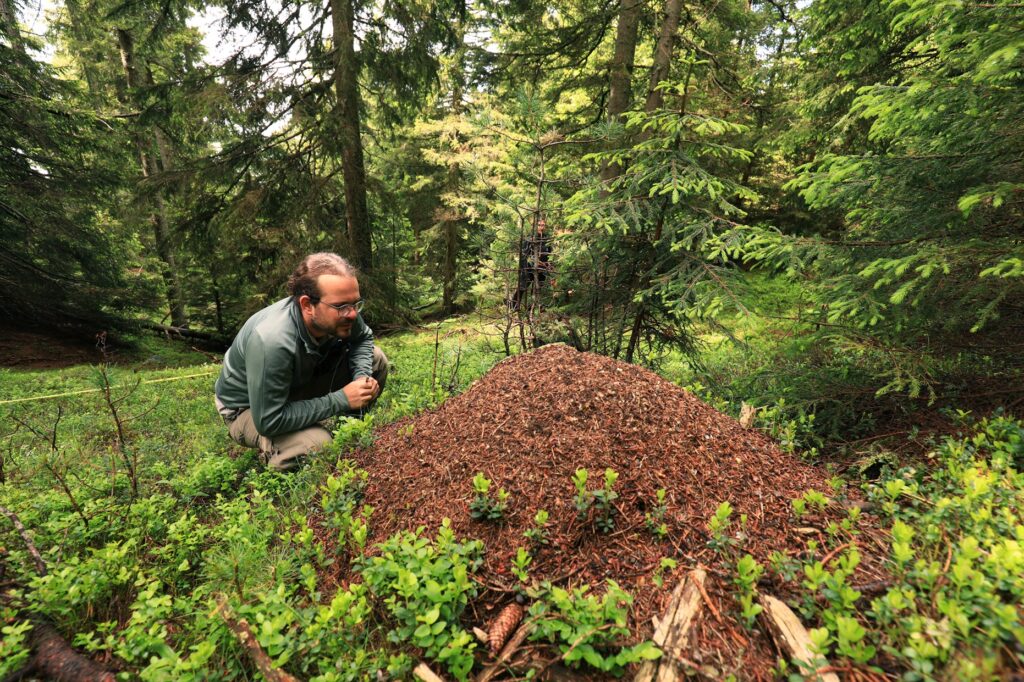
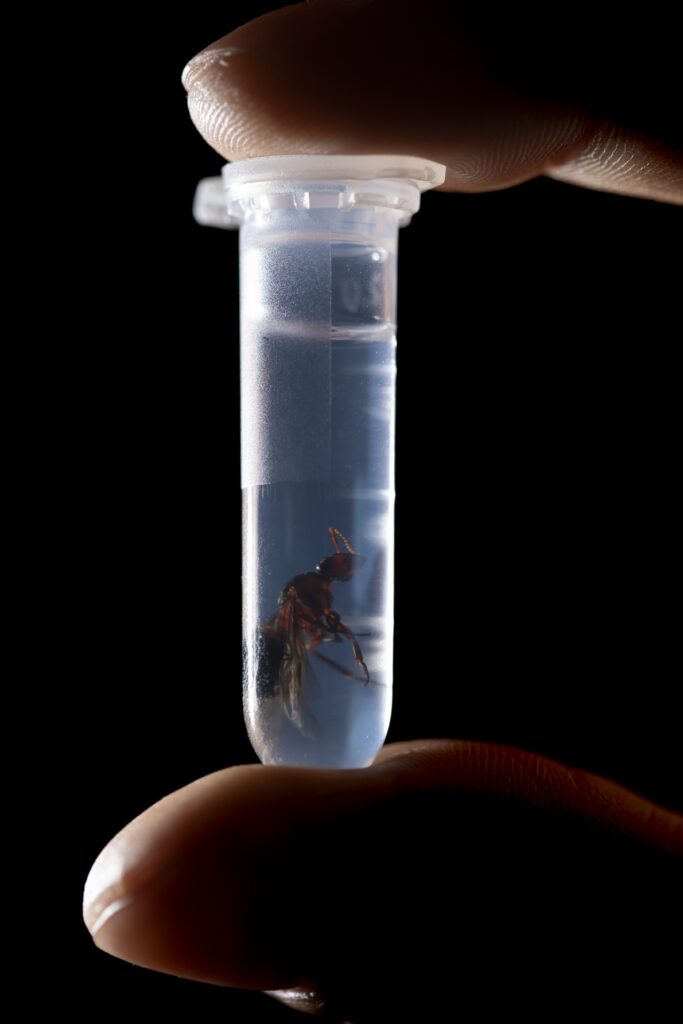
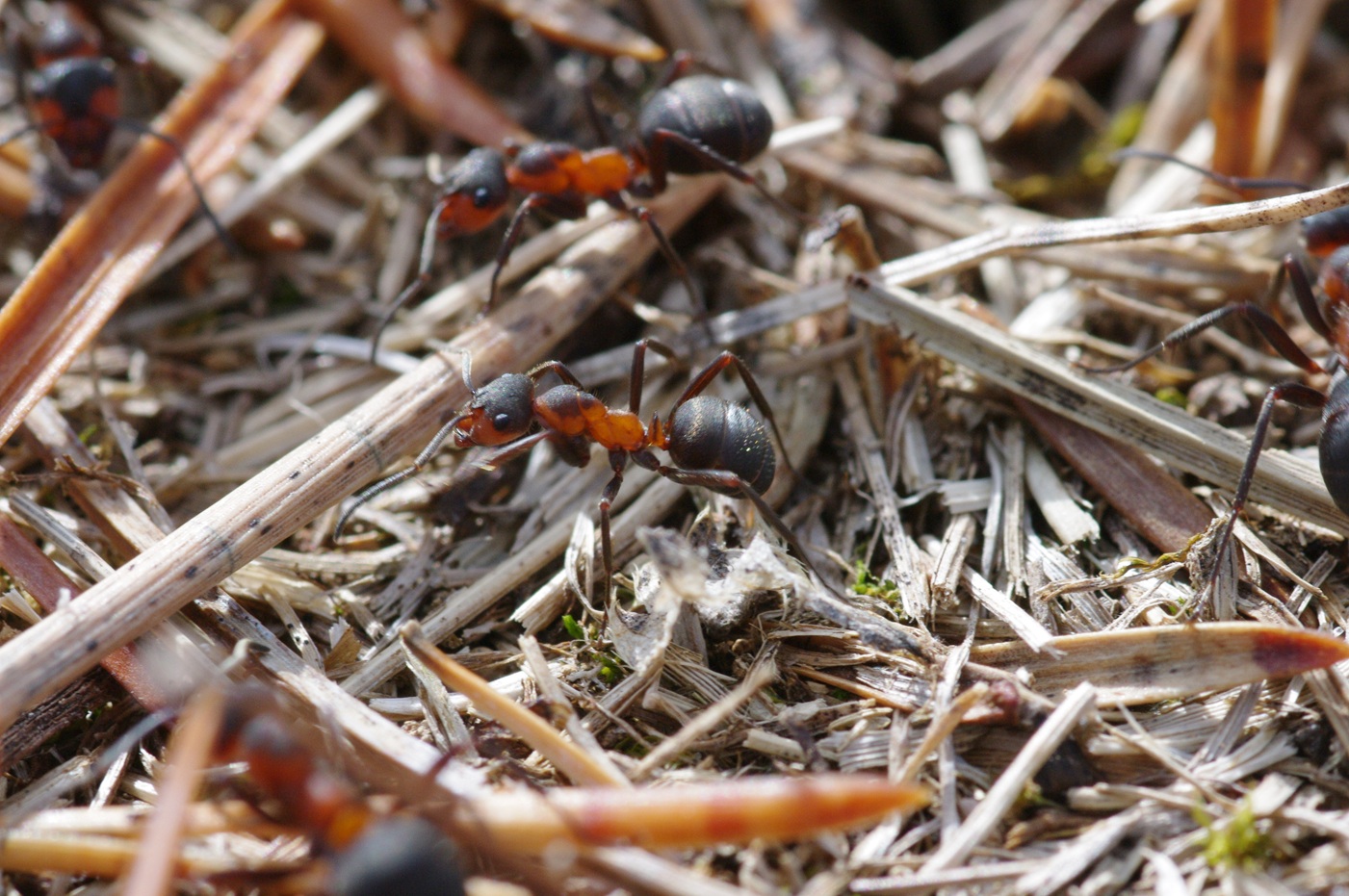
Around 14,000 ant species have been described worldwide, although estimates suggest there may be as many as 20,000 species. So far, 106 species have been recorded in South Tyrol. A particularly important group are the mound-building wood ants of the genus Formica. They are mainly found in boreal and temperate forests, including those of South Tyrol. Typically, they build large mound-shaped nests, commonly referred to as “ant hills.” These nests not only serve as shelter for the ants themselves, but also provide habitat for many other animal species. The organisms living in and on these large and long-lasting nests are scientifically referred to as myrmecophiles. Several species live exclusively in these nests, such as the larvae of the case-bearing leaf beetle (Clytra laeviuscula) or the guest ant (Formicoxenus nitidulus).
Wood ants play an extremely important role in their habitats because they provide a wide range of ecosystem functions and services: they loosen and aerate soils and disperse seeds. They consume carrion and, as predators, help regulate harmful insect populations, thereby protecting trees from pests. At the same time, they themselves serve as food for birds and mammals, and their formic acid is used by birds for plumage care.
Despite their great importance for forest ecosystems, there is increasing evidence that wood ant populations are declining and, in some areas, are even threatened with extinction. The reasons include habitat fragmentation, climate change, and intensive agricultural and forestry practices.
At present, however, Europe still lacks a comprehensive assessment of the conservation status and population trends of wood ants. Furthermore, little is known about how the threats mentioned above affect the “ant guests.” This lack of data is also due to the absence of standardized monitoring strategies across EU countries. The joint development of an efficient monitoring methodology is therefore necessary as a basis for future conservation strategies.
Project activities:
- Comparison of existing monitoring strategies and dissemination of information to stakeholders regarding the current situation at local and EU level
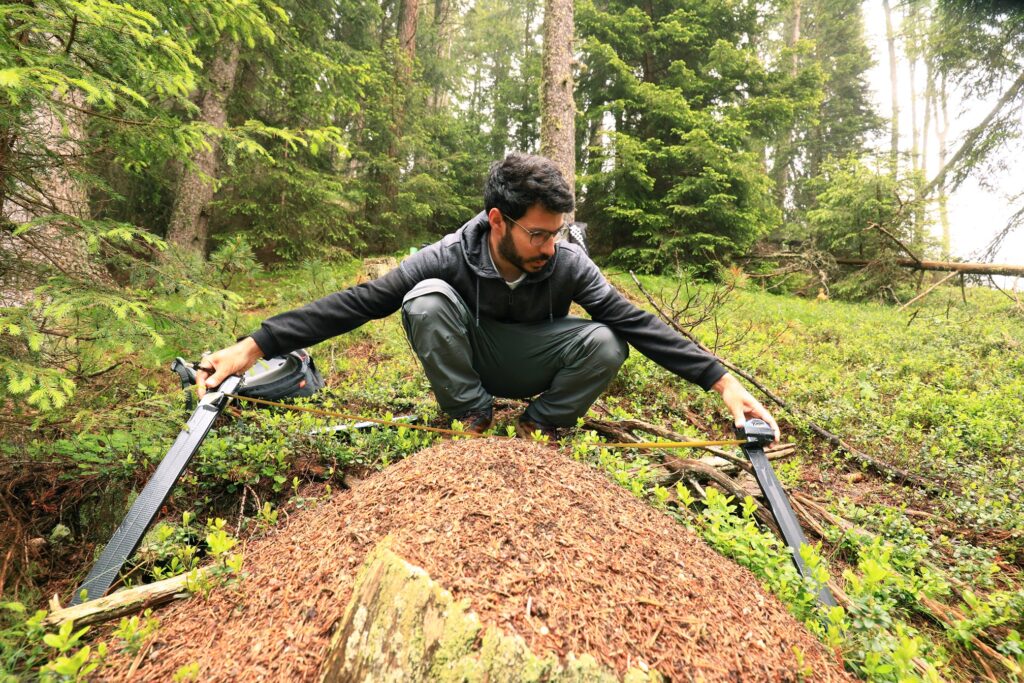
- Development of a new transnational monitoring approach that includes different forest and grassland types, takes into account altitudinal gradients and management practices, and is refined through field research
- Collection of ecological data concerning:
a) communities of myrmecophilous species (“ant guests”)
b) interactions between ants and vertebrates
c) genetics and ecological niche, i.e. the role of this species within the ecosystem, in forest habitats along different altitudinal and latitudinal gradients
Project methods:
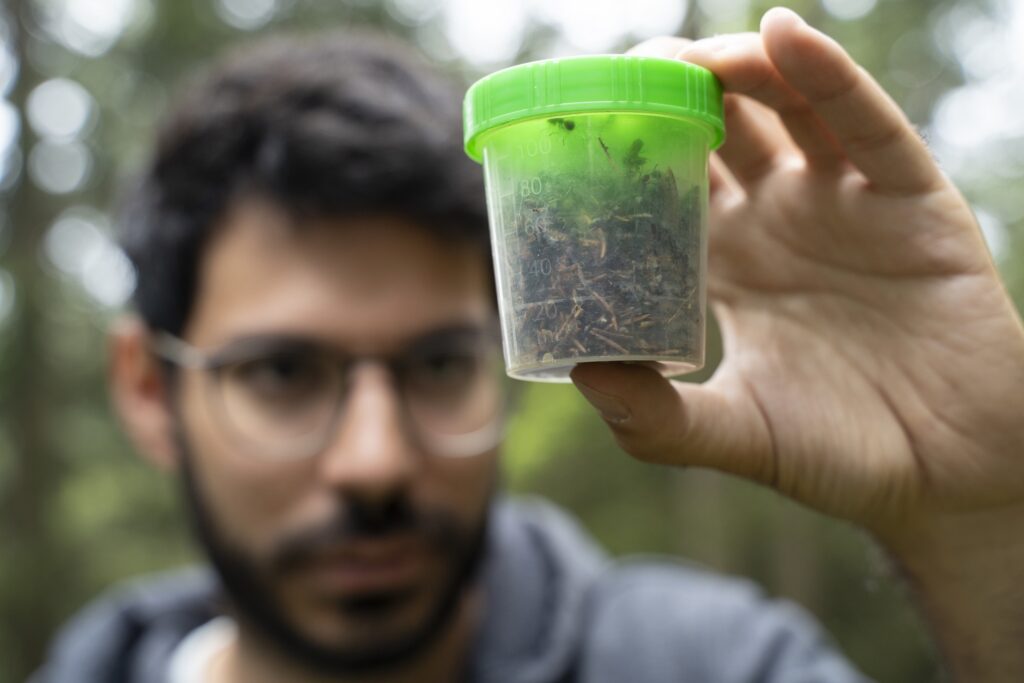
MonitAnt is a Europe-wide project involving a total of 11 countries. In addition to research activities focused on the development of monitoring strategies, public involvement through a citizen science initiative also plays an important role. The aim is to discover and document ant nests:
How to participate – MonitAnt
Project objectives and duration:
The Institute for Alpine Environment is part of the Europe-wide MonitAnt initiative. Together with the Biodiversity Monitoring South Tyrol (BMS), the above-mentioned project activities are being carried out, with the research team focusing in particular on the different characteristic forest types of South Tyrol across various altitudinal zones. The work of the South Tyrolean MonitAnt group ultimately contributes to the broader European project and helps develop a standardized monitoring system while also contributing to basic research on this group of ants.
The project is funded through the Biodiversa+ BioDivMon call and runs from 2024 to 2026.
Partners:
Eurac Research – Institute for Alpine Environment; Autonomous Province of Bolzano/Bozen South Tyrol – Department for the Right to Education, University and Research; Babes-Bolyai University (Romania); Biology Centre CAS (Czech Republic); LUKE Natural Resources Institute Finland; Royal Belgian Institute for Natural Sciences; University of Florence (Italy); University of Bayreuth (Germany); Université Libre de Bruxelles (Belgium); University of York (United Kingdom); Lucian Blaga University of Sibiu (Romania); Museum and Institute of Zoology, Polish Academy of Sciences (Poland); James Hutton Institute (Scotland, United Kingdom); University of Szeged (Hungary); Swedish University of Agricultural Sciences (Sweden).
Contact:
Elia Guariento elia.guariento@eurac.edu
Elia Nalini elia.nalini@eurac.edu